ELECTRONIKA 8
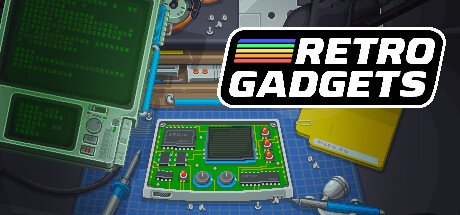
A puzzle game about electronics on real circuit physics, set in a Soviet research lab of the 1970s. Wire lamps, resistors, capacitors, transistors and chips on a breadboard, measure with a multimeter and an oscilloscope, keep to a budget, and work up from one lamp to a real device on your own chips.
Where to buy
Media
Details
About this game
This Soviet research institute has a peculiar problem with lab assistants. Two of them went to the next building to fetch a soldering iron and are still officially on a business trip. Your lab coat has already been issued, though, and your photo is on your pass, so get soldering and don't ask unnecessary questions. There are no unnecessary questions here, only unnecessary lab assistants.

Comrade lab assistant!
Congratulations, you're on the staff. Someone has already signed the safety register on your behalf so you can get straight to work. The canteen has even put a cutlet aside for you, to be collected after the quarterly report.
Even a philology student could handle your first assignment. Apparently, one did. He's now in charge of all the light switches in the building.
Build your circuits and get them working. If everything checks out, you'll get an ACCEPTED stamp. If not, well, the lab always smells of something burnt anyway.

A few words about physics
The institute operates in accordance with the laws of physics, although several department heads have expressed reservations about this arrangement. All circuits run on a real electronics simulator, and Ohm's law remains in force despite repeated attempts to revise it at party meetings.
Components heat up, resistors burn out, and the resulting scorch marks stay on your circuit board. A good resistor will give you some warning before it burns. A cheap one saves you the suspense. In either case, the accounting department knows exactly whose salary to deduct it from.
You'll also find a multimeter and an oscilloscope on your workbench. Judging by the dust, neither has interfered with the institute's research for quite some time.

On the matter of procurement
The institute has a budget and you have considerably less. Good components can be purchased from the stores, provided you have the money. There's also a flea market where everything is cheaper, mostly because nobody knows what anything is, whether you've bought a transistor or a button off someone's greatcoat will become apparent once you switch the power on.
Eventually, you'll be allowed to design your own integrated circuits. Assemble a logic gate from transistors, send the design to the factory and they'll manufacture a chip for you. The factory has fulfilled its production quota, so any discussion concerning the actual pinout should be conducted with the factory's technical department, preferably in writing.

Your career at the institute
There are 94 assignments ahead of you, and what becomes of your career depends on how you handle them. Lab assistants don't usually remain lab assistants for long. Unfortunately, the personnel department won't elaborate.
As you progress, you'll move through different rooms of the institute. There's a copy of Pravda on the desk, music from those years on the radio, and occasionally a little presentation box containing an award. Ten awards are classified, including, apparently, the reasons for awarding them.
There's also a workshop stocked with components where you can build whatever you like. The management has no interest in what happens there, provided nothing happens that requires the management's attention.
Previous experience with electronics is not required. You'll learn everything on the job. The current head of the laboratory started out as a lab assistant himself, and look how well that turned out. Now get back to work and soldering iron isn't going to heat itself.