The Sapling
Early access since Dec 2019
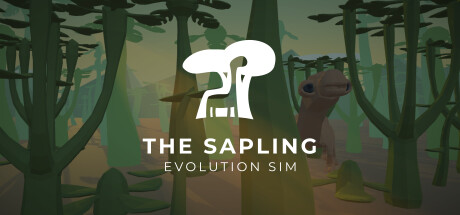
The Sapling is a simulation game where you design your own plants, animals, algae and fungi, and put them in a world together. Or you turn on random mutations, and see what evolution does to your ecosystem!
89% positive · 2,018 reviews
Not yet
In early access, still in active development
High confidence
Active Development
Not yet
In early access, still in active development
High confidence
Active Development
Where to buy
Steam $17.99
Can't confirm — worth a look
We couldn't confirm these stores carry this game.
Green Man Gaming Steam key Search IndieGala Steam key Search Prices in USD, as listed by each store.
Buying through an affiliate store helps support the site
Evaluation
The Sapling has been in Early Access since December 12, 2019, and remains actively developed by solo developer Wessel Stoop. The game has a strong, sustained history of major content updates — 5 named major updates are recorded across the post-launch period — with the most recent being the "Movement update," which entered its beta branch on November 1, 2025 and has been receiving stabilizing patches ever since. As recently as May 16, 2026 (patch v13.71), the developer shipped a substantial feature patch adding new simulation systems, balancing changes, and a new save file format. The very latest post, from June 25, 2026, launches a live 24/7 Twitch evolution streaming event on planet Wright-2b — a community engagement initiative using the game — confirming the developer is actively engaged with the project right up to the present day. The developer maintains consistent communication through Steam news posts, with 49 posts recorded including 27 feature patches, 5 major content drops, and 11 bug fixes. No announcement of a 1.0 release date or conclusion of Early Access has been made. The game is clearly in a state of ongoing, healthy development.
Evidence
Patch v13.71 ships with animal and plant simulation balancing, weight system overhaul, continental drift support, and a new save file format (format 16) — indicating continued feature development.
First unstable beta build of the 'Movement update' goes live, introducing a rebuilt walking system, new limb types, new animations, sessile animals, parasitic fungi, terrain editing during simulation, and more.
Content
1 of 1 released · no outstanding content
Media
Details
Developer
Publisher
Wessel Stoop
Achievements
5
Platform
Windows, Linux
Controller
—
Steam Deck
Playable
Players
Single-player
About this game
Design algae and plants
Whether you want a small flower that glows in the dark, black algae specialized for planets without a lot of sunlight, or a forest of giant trees covered in spikes, it's up to you.
Design aquatic, land and flying animals
Want a brightly colored fish that drags itself onto land to hide its eggs in burrows? Or perhaps a land animal that gives birth to live young and quickly runs from flower to flower to drink nectar? Or what about a flying carnivore specialized for diving and catching its prey underwater? Again, it's up to you.
Scenarios: learn the simulation step by step
While the simulation in this game can be deep and complex, it's introduced to the player step by step; it never becomes overwhelming. Each scenario tasks you to build an ecosystem that meets specific requirements, and introduces a small number of new concepts.
Sandbox: build your own planet
The sandbox offers the same functionality as the scenarios (but, obviously, with everything unlocked), but also much more: play with the procedural planet generator to get the exact planet you want, whether it's a desert world, an underwater world, or whatever you come up with. It even allows you to define up to 8 seasons to spice that ecosystem up a little. While playing, you can continue to change things: the next ice age is always only a few clicks away.
Turn on random mutations and see what evolution does with your ecosystem
The most exciting feature of the sandbox, at least according to solo dev Wessel Stoop, is random mutations. See your algae, plants and animals evolve to quickly fill available niches, see how some species are outcompeted immediately while others bloom for thousands of years... only to die out when their food source evolves a new trick to escape, and a completely different clade jumps in the now vacant niche.
Are these done yet?





Last evaluated Jun 26, 2026
Something about this evaluation looks wrong Report illegal or harmful content